Consistency across sites and physicians, without giving up quality
Laudos.AI helps your clinic standardize reports across sites and professionals, sustain volume growth and protect the institution's reputation, with the clinical staff always in command.
Your clinic's template and language applied consistently across the whole network.
A predictable report structure, preserving each radiologist's style and judgment.
Less repetitive work per exam, to keep up with the volume without shortcuts.
Connects to the PACS, the RIS and the worklist your operation already uses.
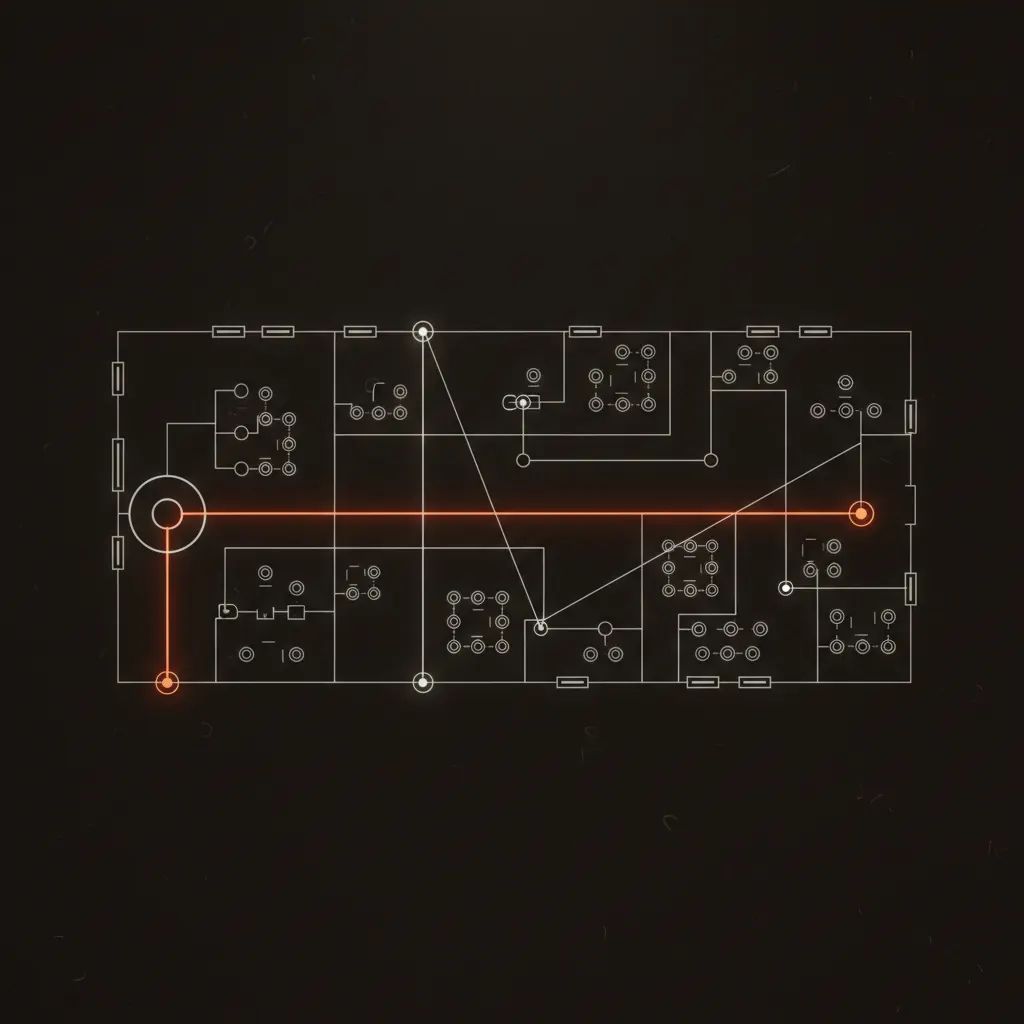
Exams come in, Laudos.AI structures them, the signed report goes back to your RIS/PACS.
An imaging network lives every day with a legitimate tension: each radiologist has their own style, their way of describing and their preferred report structure, and that is part of each professional's experience. At the same time, the clinic needs the patient and the referring physician to receive something recognizable, consistent and worthy of the institution's name, regardless of which site or shift produced the exam.
Laudos.AI was designed to respect both truths at the same time. It does not make clinical judgment uniform, nor does it take report authorship away from the radiologist. It handles the structure, the institution's template, the priors and the repetitive steps, so that the quality that already exists in your clinical staff shows up consistently in every report, at every site.
The result is volume growth that does not weigh on reputation: more exams reported, with the same quality signature, and a physician who remains in control of every word.
What you gain
The institution's template, applied consistently
The LaudAI module structures the report by modality following the standard your clinic defined: sections, order, terminology and impression. Each radiologist remains the owner of the clinical content, but the patient and the referring physician receive a document recognizable as your institution's, whichever site or shift it comes from.
Automatic priors, context in the physician's hands
The platform gathers and organizes the relevant prior exams so the radiologist can compare against the history without hunting for studies in different folders. The physician decides what is significant; Laudos.AI only reduces the time spent locating and aligning the prior. Less friction, more attention on what matters.
Dictation that comes out as a report
With REPORT, the radiologist dictates naturally and receives a structured report draft in the clinic's standard, ready for review and adjustment. This shortens the path between reading and the signed report, helping keep up with the volume without shifting pressure onto the clinical staff.
Critical findings with a trail and SLA
The CRIT module flags critical findings with a communication flow, SLA and audit trail. For a network, this means a uniform critical-finding policy across all sites, protecting the patient and giving management the documentation that each communication happened and was recorded.
- 01BEFORE
Setting up the house standard
Together with the clinical coordination, we define the templates by modality, the preferred terminology and the network's critical-finding rules. Integration with PACS, RIS and worklist is done so that reporting happens inside the flow the physicians already know, with no new window or rework.
- 02DURING
The radiologist reports, in command
The physician opens the study in the worklist, dictates or types and receives a structured draft with the priors already organized. They review, adjust and sign. The AI amplifies the work, never decides alone. The meaningful human supervision required by CFM Resolution 2.454/2026 is the very design of the platform.
- 03AFTER
Consistency the network can see
Management gets reports standardized across sites and physicians, documented critical findings and a volume that grows without sacrificing quality. Data hosted in Brazil and processed in accordance with the LGPD, with the clinic's reputation reinforced with every exam delivered.
The same exam cannot become two reports
When the report depends on who reports it and where, the clinic loses the common language that sustains the brand.
An abdominal CT can come out descriptive and verbose with one radiologist, lean and conclusive with another, and with the impression organized differently at each site. For the referring physician and for the patient, this difference affects trust. Interobserver variability is inevitable in judgment, but much of it lives in the form, not in the clinical content.
Structuring into Technique, Analysis, Impression and, when applicable, Classification gives everyone the same skeleton. Controlled vocabulary standardizes how a finding is named, not what the physician concludes about it. LaudAI assembles the structured report by modality and GUIDE anchors the classifications (BI-RADS, LI-RADS, PI-RADS, TI-RADS, Lung-RADS) in recognized criteria.
The judgment remains the radiologist's, who reviews, edits and signs. What changes is the starting point: instead of each report being born from a blank sheet, it is born from a common structure. Consistency stops depending on individual memory and discipline and becomes built into the flow, site by site.
Technique, Analysis, Impression and Classification at every site and with every physician.
Standardizes how the finding is named, without touching the clinical conclusion.
GUIDE keeps BI-RADS, LI-RADS, PI-RADS, TI-RADS and Lung-RADS on recognized criteria.
The radiologist reviews, edits and signs; the judgment remains theirs.
House templates, with an owner and a version
Standardizing means deciding explicitly what changes, who changes it and when.
In a network, the template cannot be a file each physician adjusts on their own. It is an asset of the clinic, with a version, a history and an owner. When the medical leadership revises how a pulmonary nodule is described or standardizes the impression of a mammogram, the change has to apply to everyone at the same time and be recorded.
The per-exam audit trail and role-based access support this governance. You know which template version generated each report and who had permission to change it. This is governance and visibility, not surveillance: the goal is to trace the rule, not the physician. The radiologist remains the author of the report they sign.
Standardization also protects the brand. A report with the network's identity, a predictable structure and consistent vocabulary communicates care to the referring physician and to the patient. The template and the controlled vocabulary carry this identity without turning each physician into an exception, and without forcing anyone to give up their own clinical judgment.
Version, history and owner, not a loose file per physician.
Leadership decides the standard and it then applies to all sites.
You know which version generated each report and who could change it.
Consistent identity and structure without turning each physician into an exception.
Grow volume without missing the deadline
The bottleneck is rarely the image; it is the time between the completed exam and the signed report.
An accumulated backlog becomes a contract and reputation risk. When volume rises and the queue grows, TAT slips and rework increases. The post-imaging layer acts precisely at this point: the report is born structured, by voice or by modality, and the physician spends the time reviewing and deciding, not formatting text.
In production with 5,200 reports over 30 days, the median from editor to signature was 52 seconds and 54.6% of reports were signed in under a minute, the equivalent of about 10 hours returned per 100 reports. The numbers are illustrative; the proposal uses your operation's real volume to estimate the gain.
That recovered time is what makes it possible to absorb peaks and redistribute load across sites without sacrificing deadlines. Quality is not traded for speed because the structure and vocabulary stay the same, regardless of how much the queue has grown. Growing no longer means hiring in exactly the same proportion as volume.
Each contract has its own clock
In a network, the deadline breaks down by client, by payer and by site.
A partner hospital may require a report within a few hours, a payer works with a different deadline and a teleradiology contract has its own SLA. Treating everything as a single queue hides where the risk is. Visibility by client and by payer shows which commitment is close to being breached before it is breached, not after.
The post-imaging layer organizes the queue with this context. Findings that require urgent communication enter the CRIT flow, with an SLA and a closed loop following the ACR Actionable Reporting standard, through to confirmation of receipt. That way the critical finding does not compete for attention with the routine report; each has its own clock and its own record.
For management, this becomes contractual predictability. You negotiate SLAs knowing your real capacity and track compliance by client, not by overall average. When a deadline gets tight, you can redistribute load across sites based on data, not on assumptions about who is overloaded at the moment.
Visibility by client, payer and site, not a single blind queue.
CRIT follows ACR Actionable Reporting through to confirmation of receipt.
You see which SLA is near its limit while there is still time to act.
Reallocates load across sites based on the real queue, not on assumptions.
The house standard as scaffolding
A new physician takes a while to report the clinic's way because the standard lives in the veterans' heads.
When the standard is tacit, the newly arrived radiologist learns by trial, correction and addendum, and leadership spends time reviewing reports that stray from the house line. The curve is long and expensive, even more so in a network, where each site tends to accumulate its own bad habits. Turnover and the use of shift physicians make the problem worse.
The template and the controlled vocabulary turn this tacit knowledge into explicit scaffolding. The new physician starts from the same structure of Technique, Analysis, Impression and Classification that everyone uses, with GUIDE guiding the classifications. They produce closer to the standard from their first reports, without having to memorize each site's style preferences.
This does not replace judgment or supervision; the report is still reviewed, edited and signed by the physician. But the common starting point shortens the curve and reduces the correction effort. For management, it means getting a radiologist producing to standard in less time, with less manual follow-up and less variation between newcomers and veterans.
An addendum for an error is not an addendum for an update
Without distinguishing the types of addendum, the clinic confuses avoidable rework with legitimate correction.
Every addendum goes into the same pile when there is no category. But an addendum that corrects a report error is a sign of rework; an addendum that incorporates new data, a comparison that arrived later or a clinical correlation is a legitimate and desirable update. Adding the two into a single metric hides exactly what management needs to see.
The per-exam audit trail lets you look at this honestly. You measure how many addenda come from failures and how many come from updates, and track whether standardization is in fact reducing avoidable variability. The structure and the controlled vocabulary provide a stable basis for comparison, because what changes between reports stops being the form and becomes the clinical content.
Measurable quality is what supports the conversation with leadership and with clients. Instead of claiming the network is standardized, you show to what degree, where there is deviation and whether it is falling. The AI does not pass judgment on diagnostic accuracy; it provides the structure and the record that make your own quality measurement possible.
Start at one site, scale on data
Adopting well means proving it in the real routine of one site before taking it to the whole network.
Serious evaluation does not happen in a controlled demo, but in the real queue of a site, with actual volume and modalities. The 30-day pilot exists for this: run in routine, measure time to signature, template adherence and SLA compliance, and decide with data from your operation, not with illustrative numbers from third parties.
Integration does not require replacing what already works. The post-imaging layer talks to PACS, RIS and worklist via HL7 v2, FHIR R4, DICOM-SR and DICOM MWL, with a dedicated engineer and a test environment with synthetic or anonymized data before touching production. You do not rebuild your technology stack to try it out.
Growing is a decision, not a contractual obligation. You start at one site, validate, and scale to the others at the pace the network can handle. Data resides in Brazil, with LGPD, ANPD, DPO and role-based access, and the physician remains the author of every report. With no contractual lock-in, the negotiating leverage stays with you at every step of the expansion.
30 days in one site's queue, with actual volume and modalities.
Integrates with PACS, RIS and worklist via HL7 v2, FHIR R4, DICOM-SR and MWL.
Dedicated engineer and an environment with synthetic or anonymized data.
Local residency, LGPD, ANPD, DPO and role-based access.
The network can govern templates and permissions without erasing the authorship and responsibility of the physician who reviews and signs.
Honest questions
Won't standardizing erase our radiologists' style?
No. Standardization acts on the structure of the document, sections, order, house template, and not on clinical judgment. Each radiologist keeps their way of describing and their authorship. The goal is for the report to be recognizable as your clinic's, not for all physicians to write the same way.
Will the AI write the report in place of the physician?
Never. Laudos.AI is assistive: it generates drafts, organizes priors and flags findings. Every report goes through the review and signature of a radiologist, who remains fully responsible. This design is aligned with the meaningful human supervision provided for in CFM Resolution 2.454/2026.
What about integration with our PACS/RIS and data security?
Compatibility depends on the system, the version and the connector. API, HL7, DICOM and Agent are distinct paths, validated for each deployment. Regions, subprocessors, persistence, logs, retention and backups are also documented within that scope.
Is billing by volume or by user?
Billing follows volume, not the number of logins. The individual plan, for example, is R$ 299 per month for up to 1,000 reports. For clinics and networks, the proposal is built on the operation's real volume, so you pay for what you actually report, not for idle seats.
Does it work in a network with multiple sites?
Yes, and that is precisely where the post-imaging layer delivers the most. Template, vocabulary and classifications become common to all sites, with a per-exam audit trail and role-based access. You start at one site in the 30-day pilot and scale to the others at the network's pace.
Does it keep the identity of our reports?
It does. The template is your house's, with your structure and your vocabulary, and the physician remains the author of what they sign. Standardization preserves the clinic's brand and language; it reduces variation in form between physicians and sites, not the identity of your network's report.
What about physicians who resist change?
It is a legitimate concern, and the answer is not to take anyone's judgment away. The AI is assistive: it structures and suggests; the physician reviews, edits and signs, with a median of 52 seconds from editor to signature in production. Since they start from a ready-made structure, most notice time gained rather than autonomy lost.
Does it integrate with our system?
It integrates without replacing what already works. We talk to PACS, RIS and worklist via HL7 v2, FHIR R4, DICOM-SR and DICOM MWL, with a dedicated engineer. Before production, there is a test environment with synthetic or anonymized data to validate the fit with your current stack.
How long until we see results?
The 30-day pilot already runs in the real routine and measures time to signature, template adherence and SLA in your operation. In production with 5,200 reports in 30 days, the median was 52 seconds to signature. The result shows up in the pilot itself, with your own numbers, not illustrative ones.
Book a conversation with our team and see how Laudos.AI standardizes reports across sites and physicians, integrates with your PACS/RIS and supports volume growth, with the clinical staff always in charge.